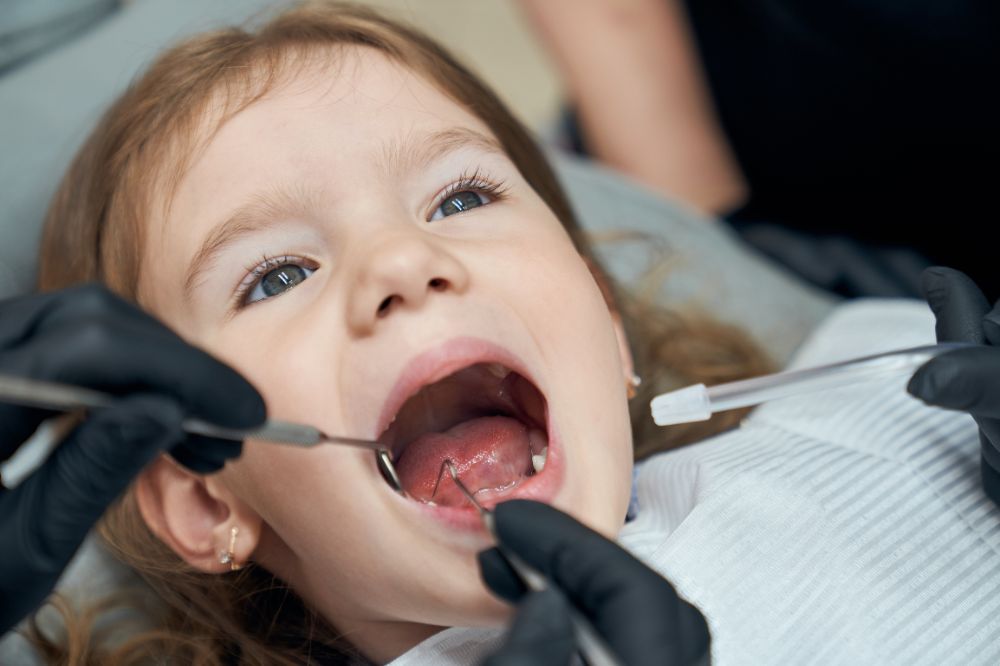
Cavities can start small and grow quickly in children. A quick check every week can protect your child’s smile and reduce the need for primary treatment later. If you ever feel unsure, visiting a children’s dentist near you can give you peace of mind and straightforward answers.
Early action matters because baby teeth help children chew and speak clearly and guide adult teeth into place. When decay is found early, treatment is simpler and more comfortable.
Why is Early Cavity Detection Important?
Cavities do not appear overnight. They start as weak spots in the enamel, which is the outer layer of the tooth. If left unaddressed, these weak spots become holes.
Early checks at home support preventive dentistry for children near you and help you:
- Stop minor problems from getting bigger
- Prevent pain and infection
- Avoid missed school days
- Reduce stress for your child
The earlier you find a cavity, the easier it is to treat.
What are the Early Signs of Tooth Decay in Kids?
Many parents ask about common kids’ tooth decay symptoms. Watch for:
- White or chalky spots on teeth
- Yellow, brown, or black stains
- Sensitivity to hot or cold foods
- Complaints of tooth pain
- Swelling around the gums
- Bad breath that does not go away
These signs may seem small, but they can signal the start of decay.
7 Easy Home Checks to Spot Early Cavities
You don’t need any special tools. Good lighting and a few minutes are enough.
1. Check for White Spots
Look closely at the front and back teeth. White, dull spots often mean the enamel is losing minerals. It is one of the first signs of early decay.
What to do:
- Make sure your child brushes twice daily
- Use fluoride toothpaste
- Limit sugary snacks
2. Look for Dark Stains
Brown or black spots may indicate that decay has spread deeper. Sometimes stains are only surface marks, but it is safer to get them checked.
Pay attention to:
- The stain does not brush away
- The spot looks like a tiny hole
3. Ask About Sensitivity
Children may not be able to describe their pain. Ask your child simple questions such as:
- “Does this feel funny?”
- “Does it hurt when you drink something cold?”
If your child is avoiding certain foods, it may be due to pain.
4. Look for Changes in Eating Patterns
A child with tooth pain may:
- Only chew on one side of their mouth.
- Avoid eating crunchy foods.
- Eat slowly, as if savoring each bite.
These are subtle signs of a problem.
5. Check Their Breath
When children have persistent bad breath even after brushing, it may mean bacteria are building up. It could be related to early decay.
If brushing and flossing do not work, a visit to the dentist is a good idea.
6. Examine the Gums Gently
Healthy gums are pink and firm. If you notice:
- Redness.
- Swelling.
- Bleeding when brushing.
It may mean plaque is collecting around the teeth. Gum problems often appear alongside cavities.
7. Watch for Complaints at Night
Tooth pain can feel stronger at bedtime. If your child says their tooth hurts when lying down, do not ignore it. Night pain often means decay has progressed.
Can Early Cavities Be Reversed in Kids?
Yes, but only in the very early stage. When decay is still a white spot and has not formed a hole, it may be reversed by:
- Using fluoride toothpaste
- Improving brushing and flossing
- Reducing sugary snacks and drinks
- Drinking water after meals
Once a cavity forms, it cannot heal on its own. A dentist will need to treat it.
When Should You See a Dentist?
Home checks are helpful, but they are not a replacement for professional exams. Regular visits help detect hidden cavities between teeth or under the surface. If you notice any of the signs listed above, schedule an appointment. A pediatric dentist near Leoni can examine your child’s teeth, take safe X-rays if needed, and explain the next steps clearly. Experts recommend dental visits every six months, even if there are no visible problems.
Simple Habits That Protect Your Child’s Smile
Along with home checks, daily habits matter most.
Daily Care Routine
| Habit | Why It Matters |
| Brush twice a day | Removes plaque and food particles |
| Floss once a day | Cleans between teeth |
| Drink water after meals | Washes away sugars |
| Limit sticky sweets | Reduces cavity risk |
| Visit the dentist regularly | Detects problems early |
These small actions build strong, healthy teeth.
Protect Growing Smiles at Grass Lake Pediatric Dentistry and Orthodontics
Your child’s smile needs gentle attention. At Grass Lake Pediatric Dentistry and Orthodontics, our staff provides gentle, friendly checkups to detect early signs of cavities. Do not wait until your child complains of pain. Schedule an appointment today to preserve your child’s healthy and confident smile.
FAQs:
How often should I check my child’s teeth at home?
It is best to do a quick check once a week to look for any early signs of changes in color, texture, or sensitivity.
Can early cavities appear without causing pain?
Yes. Many early cavities begin as white or chalky spots that do not cause any pain.
Are home checks enough to prevent cavities?
Home checks are helpful, but they cannot substitute for regular dental visits. Regular dental visits can detect hidden cavities that are not easily visible.
When should I call a dentist immediately?
If your child shows pain, swelling, dark spots, or sensitivity that doesn’t improve with brushing, contact a dentist right away.